|
|
Contexts for Learning Mathematics : Grades 3-5
Investigating Multiplication and Divison
Fosnot, Catherine Twomey, and Colleagues. Contexts for Learning Mathematics : Grades 3-5 : Investigating Multiplication and Divison. - 8 vol. + 1 CD-Rom + 17 posters
"Investigating Multiplication and Division (Grades 3-5) explores with increasing sophistication big ideas in multiplication and division including systematic factoring and the distributive, associative, and commutative properties, as well as their use in computation."
 Fosnot, Catherine Twomey. Overview : Investigating Multiplication and Division : Grades 3-5. - 43, [1] p. - ISBN 978-0-325-10179-3 Fosnot, Catherine Twomey. Overview : Investigating Multiplication and Division : Grades 3-5. - 43, [1] p. - ISBN 978-0-325-10179-3
"In this Overview book Cathy explains the series' teaching and learning philosophy and provides the professional understandings needed to establish a vibrant math workshop. After chronicling the motivations and ideals that inspire her work, Cathy describes how the series is designed to help students construct the big ideas, strategies, and models that shape the landscape of learning. Ensuing sections describe the architecture of an investigation and explain how the predictability of this framework fosters independence and collaboration. In addition to describing the management systems that make these investigations rigorous and responsive, Cathy suggests ways to sequence instruction and highlight how units can be used to enhance your existing curriculum."
http://www.contextsforlearning.com/samples/35OverviewContents.pdf
Fosnot, Catherine Twomey, and Collegues. Resources for investigating multiplication and division. - 1 disco óptico (CD-Rom)
"The Resources for Investigating Multiplication and Division CD-ROM is a start-anywhere, follow-your-own-interests, menu-driven professional resource. This CD-ROM can help you organize your math workshop and launch the series. Or, throughout the year, it can be used to refine your practice and guide your instruction."
Grades 2-3
 Galen, Frans van; Fosnot, Catherine Twomey. Groceries, Stamps, and Measuring Strips : Early Multiplication. - 76 p. + 5 posters. - ISBN 978-0-325-01016-8 Galen, Frans van; Fosnot, Catherine Twomey. Groceries, Stamps, and Measuring Strips : Early Multiplication. - 76 p. + 5 posters. - ISBN 978-0-325-01016-8
"Using baker's trays, postage stamps, patio tiles, and other realistic contexts, Groceries, Stamps, and Measuring Strips was developed to introduce multiplication in grades 2-3. Initially, formal multiplication notation is not the focus; efficient grouping is, as students are encouraged to make groups (and groups of groups) as an efficient way to deal with repeated addition and determine totals. Carefully crafted arrangements of real-world resources invite strategies such as the use of doubles, doubling and halving, and partial products. As the unit progresses, formal notation and use of the language of "times" is introduced within the context of measuring buildings and other objects in a city in relation to the height of eight-year-old Antonio, who is four feet tall. For example, a tree is determined to be twelve feet high if it is three times the height of Antonio. Subsequently, making measuring strips invites children to discuss relationships that help them automatize the basic multiplication facts."
Posters:
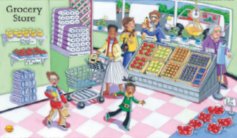 Poster 1 - Grocery Store Poster 1 - Grocery Store
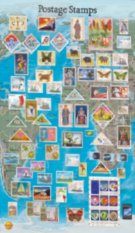 Poster 2 - Postage Stamps Poster 2 - Postage Stamps
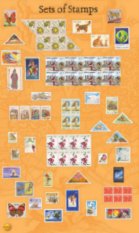 Poster 3 - Sets of Stamps Poster 3 - Sets of Stamps
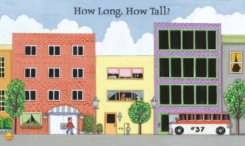 Poster 4 - How Long, How Tall? Poster 4 - How Long, How Tall?
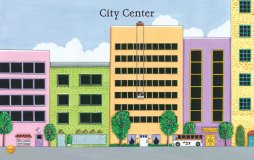 Poster 5 - City Center Poster 5 - City Center
"Groceries, Stamps, and Measuring Strips uses baker's trays, patio tiles, and other real-world resources to introduce fundamental multiplication strategies. The careful arrangements of these resources invite repeated addition, skip-counting, and doubling strategies, as well as introduce the language of grouping. Measurement strips are used to explore the relationships between products. As the unit progresses, formal notation and use of the language of "times" is introduced within the context of measuring buildings and other objects in a city in relation to the height of eight-year-old Antonio, who is four feet tall. For example, a tree is determined to be twelve feet high if it is three times the height of Antonio. Subsequently, making measuring strips invites children to discuss relationships that help them automatize the basic multiplication facts."
Grades 3-4
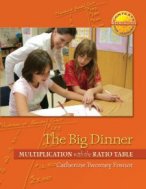 Fosnot, Catherine Twomey. The Big Dinner : Multiplication with the Ratio Table. - 64 p. + 2 posters. - ISBN 978-0-325-01018-2 Fosnot, Catherine Twomey. The Big Dinner : Multiplication with the Ratio Table. - 64 p. + 2 posters. - ISBN 978-0-325-01018-2
"In The Big Dinner, the context of preparing a turkey dinner initially engenders a discussion on students' early multiplication strategies. As the unit progresses, the ratio table is introduced and students are supported to use the distributive property with large numbers. Strings of related problems guide learners toward computational fluency with whole-number multiplication and build automaticity with multiplication facts by focusing on relationships. This unit was designed to be used in grade 3."
http://www.contextsforlearning.com/samples/3_5SampleUnitOverview.pdf
Posters:
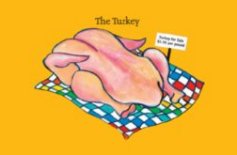 Poster 1 - The Turkey Poster 1 - The Turkey
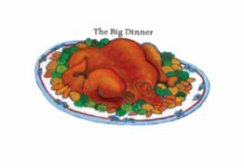 Poster 2 - The Big Dinner Poster 2 - The Big Dinner
"In The Big Dinner the preparation of a turkey dinner introduces early multiplication strategies and supports automatizing the facts, using the ratio table, and developing the distributive property with large numbers. Strings of problems guide learners toward computational fluency with whole-number multiplication and build automaticity with multiplication facts by focusing on relationships."
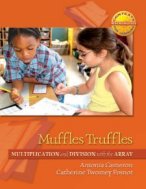 Cameron, Antonia; Fosnot, Catherine Twomey. Muffles' Truffles : Multiplication and Division with the Array. - 64 p. + 3 posters. - ISBN 978-0-325-01019-9 Cameron, Antonia; Fosnot, Catherine Twomey. Muffles' Truffles : Multiplication and Division with the Array. - 64 p. + 3 posters. - ISBN 978-0-325-01019-9
"A chocolatier's efforts to cope with the operational challenges of running a truffle shop (counting, pricing, and labeling assorted boxes of chocolates) in Muffles' Truffles introduce students to the array as a model for multiplication and division. A series of investigations explores and invites students to make use of place value—the multiplicative structure of our baseten system and quotative division—and big ideas in multiplication, including the distributive, associative, and commutative properties. As the unit progresses, students design boxes for Muffles and build blueprints of their designs with graph paper arrays, and the array of chocolates arranged in rows and columns is progressively transformed into the open array model. This unit was developed for grade 3."
Posters:
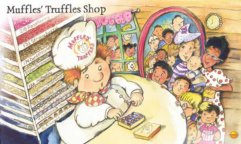 Poster 1 - Muffles' Truffles Shop Poster 1 - Muffles' Truffles Shop
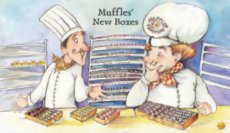 Poster 2 - Muffles' New Boxes Poster 2 - Muffles' New Boxes
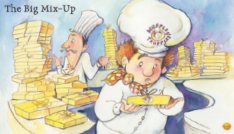 Poster 3 - The Big Mix-Up Poster 3 - The Big Mix-Up
"A chocolatier's efforts to cope with the operational challenges of running a truffle shop (counting, pricing, and labeling assorted boxes of chocolates) in Muffles' Truffles introduces students to the open array as a model for multiplication and division. A series of investigations explore place value-the multiplicative structure of our base-ten system and quotative division-and big ideas in multiplication, including the distributive, associative, and commutative properties."
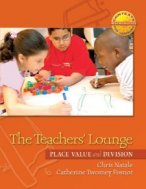 Natale, Chris; Fosnot, Catherine Twomey. The Teachers' Lounge : Place Value and Division. - 64 p. + 4 posters. - ISBN 978-0-325-01022-9 Natale, Chris; Fosnot, Catherine Twomey. The Teachers' Lounge : Place Value and Division. - 64 p. + 4 posters. - ISBN 978-0-325-01022-9
"The stocking of water and juice vending machines in The Teachers' Lounge introduces big ideas related to division. In considering different ways to inventory the contents of each machine, students employ a repertoire of strategies, including the use of the ten-times strategy, partial products and partial quotients, and the distributive property of multiplication over addition—the basis for the long division algorithm. They also examine the relationship between partitive and quotative models of division and explore what to do with remainders in various contexts. This unit was designed to be used in grade 4."
Posters:
 Poster 1 - The Water Machine Poster 1 - The Water Machine
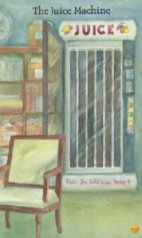 Poster 2 - The Juice Machine Poster 2 - The Juice Machine
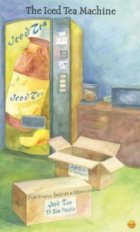 Poster 3 - The Iced Tea Machine Poster 3 - The Iced Tea Machine
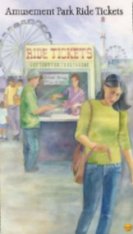 Poster 4 - Amusement Park Ride Tickets Poster 4 - Amusement Park Ride Tickets
"The stocking of water and juice vending machines in The Teachers' Lounge introduces big ideas related to division. In considering different ways to inventory the contents of each machine, students employ a repertoire of strategies, including the use of the ten-times strategy, partial products and partial quotients, and the distributive property of multiplication over addition-the basis for the long division algorithm. They also examine the relationship between partitive and quotative models of division and explore what to do with remainders in various contexts."
 Uittenbogaard, Willem; Fosnot, Catherine Twomey. Minilessons for Early Multiplication and Division : a Yearlong Resource. - 77 p. - ISBN 978-0-325-01021-2 Uittenbogaard, Willem; Fosnot, Catherine Twomey. Minilessons for Early Multiplication and Division : a Yearlong Resource. - 77 p. - ISBN 978-0-325-01021-2
"Minilessons for Early Multiplication and Division is a resource of 75 minilessons. Some of the minilessons use pictures of realistic situations, others make use of quick images with ten-frames and arrays while other minilessons are crafted as a tightly structured series of computation problems. These minilessons will generate discussion on certain strategies or big ideas underlying an understanding of early multiplication and division."
http://www.contextsforlearning.com/samples/RG35EarlyMultDivConSum.pdf
Grades 3-5
 Jensen, Miki; Fosnot, Catherine Twomey. The Box Factory : Extending Multiplication with the Array. - 72 p. + 3 posters. - ISBN 978-0-325-01020-5 Jensen, Miki; Fosnot, Catherine Twomey. The Box Factory : Extending Multiplication with the Array. - 72 p. + 3 posters. - ISBN 978-0-325-01020-5
"The Box Factory was designed to be used in grade 4 or 5. Its focus is the deepening and extending of students' understanding of multiplication, specifically the associative and commutative properties and their use with computation, systematic factoring, and the extension of an understanding of two-dimensional rectangular arrays to three-dimensional arrays within rectangular prisms. As the unit progresses, formulas for area, surface area of rectangular prisms, and volume are generalized and the relationship between surface area and volume is explored within the context of a box factory, with students designing boxes to meet specific size and space requirements."
Posters:
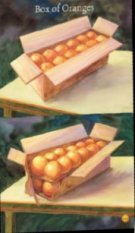 Poster 1 - Box of Oranges Poster 1 - Box of Oranges
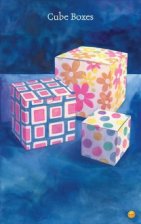 Poster 2 - Cube Boxes Poster 2 - Cube Boxes
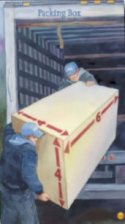 Poster 3 - Packing Box Poster 3 - Packing Box
"The focus of The Box Factory is the deepening and extending of students' understanding of multiplication, specifically the associative and commutative properties and their use with computation; systematic factoring; and the extension of students' understanding of two-dimensional rectangular arrays to three-dimensional arrays within rectangular prisms. The concepts are explored within the context of a box factory where boxes are designed to meet specific size and space requirements."
 Fosnot, Catherine Twomey; Uittenbogaard, Willem. Minilessons for Extending Multiplication and Division : a Yearlong Resource. - 71 p. - ISBN 978-0-325-01103-5 Fosnot, Catherine Twomey; Uittenbogaard, Willem. Minilessons for Extending Multiplication and Division : a Yearlong Resource. - 71 p. - ISBN 978-0-325-01103-5
"Minilessons for Extending Multiplication and Division contains 77 minilessons. Structured as strings of related computation problems. They are likely to generate discussion of certain strategies or big ideas that are landmarks on the landscape of learning for multiplication and division, particularly using numbers with two and three digits."
http://www.contextsforlearning.com/samples/RG35ExtMultDivConSum.pdf
|
|